
 By Mehak Ishfaq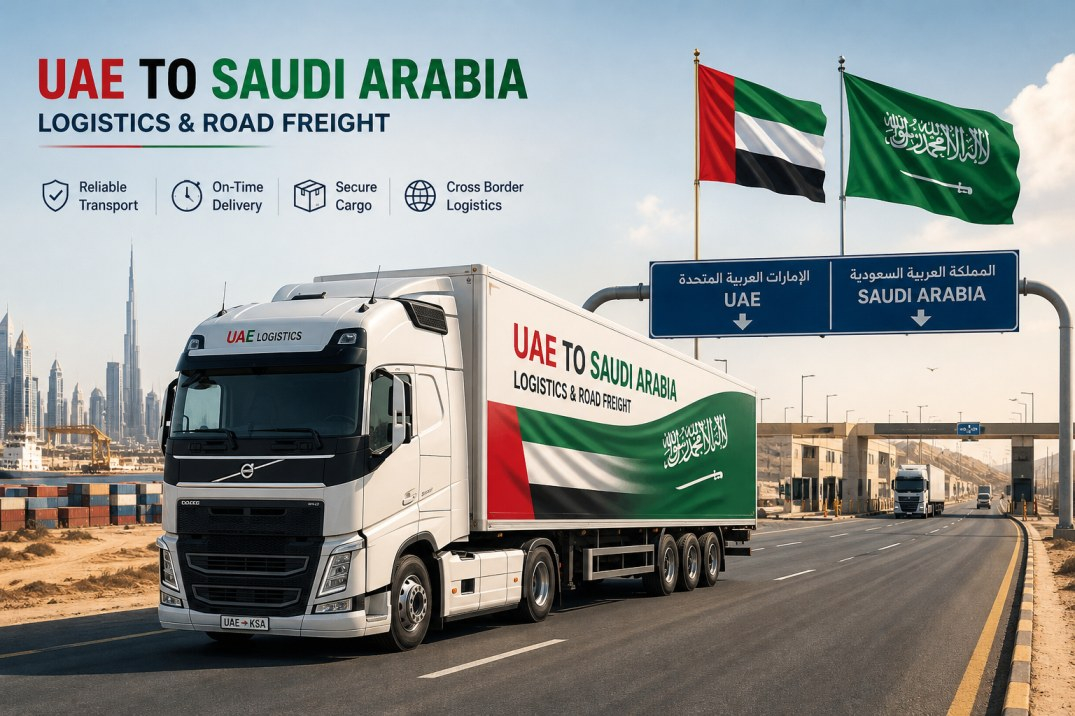
The UAE and Saudi Arabia are among the most important commercial markets in the Gulf, making the road freight connection between them increasingly important for businesses, exporters, retailers, manufacturers, and investors.
For companies shipping goods from Dubai, Abu Dhabi, or other UAE emirates into Saudi Arabia, the main questions are usually straightforward: How much will transportation cost? How long will delivery take? Which route should the truck use? And what documents are required at the border?
The answer depends on the cargo, destination, truck type, customs requirements, and timing. While the physical journey can be relatively predictable, customs clearance and documentation can have a major effect on the final delivery schedule.
How Does UAE to Saudi Arabia Road Freight Work?
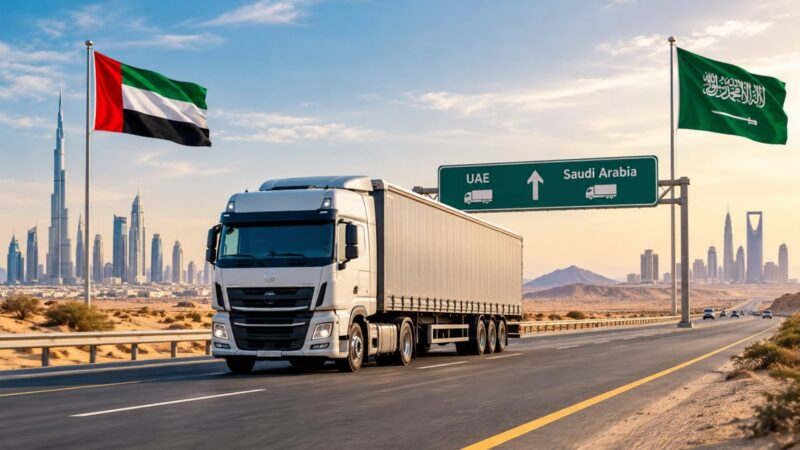
Most commercial road shipments traveling from the UAE to Saudi Arabia use the western UAE border area and enter Saudi Arabia through the Al Batha border crossing.
The route is particularly important for businesses moving commercial cargo between Dubai and major Saudi cities such as Riyadh, Dammam, Al Khobar, and Jeddah.
A typical shipment involves several stages:
- Cargo preparation and packaging
- Commercial documentation
- Truck loading
- UAE export customs procedures
- Border crossing
- Saudi customs clearance
- Inland transportation to the final destination
- Final delivery
The actual driving time is only one part of the process. Customs preparation, inspections, documentation, and border congestion can sometimes have a greater impact on the final delivery date.
UAE to Saudi Arabia Shipping Time
Transit time depends heavily on the destination and type of shipment.
As a general planning guide, road freight from Dubai may take approximately:
| Destination | Approximate Distance | Typical Road Transit |
|---|---|---|
| Dammam / Al Khobar | 650–700 km | 1–2 days |
| Riyadh | 950–1,050 km | 2–3 days |
| Jeddah | Around 2,000 km | 3–5 days |
These are planning estimates rather than guaranteed delivery times. Customs clearance, border queues, weather, inspections, weekends, holidays, and documentation problems can all extend the journey.
For time-sensitive cargo, businesses should therefore add a reasonable border and clearance buffer instead of planning solely around driving distance.
What Is the Cost of Shipping From UAE to Saudi Arabia?
There is no single fixed UAE to Saudi Arabia shipping price.
Freight companies generally calculate the quotation according to several factors, including:
1. Cargo Size and Weight
A full truckload is normally priced differently from a smaller groupage shipment. Large or heavy cargo may require specialized equipment and additional handling.
2. Truck Type
Curtain-side trailers, flatbeds, refrigerated trucks, tankers, and other specialized vehicles have different operating costs.
Temperature-controlled shipments, for example, usually cost more because refrigeration must be maintained throughout transportation.
3. Destination
A shipment from Dubai to Dammam is considerably different from one traveling all the way to Jeddah. Distance, fuel consumption, driver requirements, and return-load availability can influence the quotation.
4. Customs and Documentation
Incorrect or incomplete paperwork can create additional costs through delays, storage, detention, inspections, or amendments.
5. Border Waiting Time
Waiting time is another important cost consideration. A freight quote that looks cheaper initially may become more expensive if the carrier charges detention or waiting fees after a specified period.
6. Seasonal Demand
Freight capacity can tighten around major holidays, Ramadan, Hajj periods, and other high-demand periods. Businesses shipping during busy seasons should arrange transportation earlier.
Main UAE to Saudi Arabia Freight Route
The UAE–Saudi road connection through the western border is the most important route for many commercial shipments.
After leaving the UAE, cargo generally travels toward the Al Ghuwaifat area before entering Saudi Arabia through Al Batha.
From there, trucks can continue toward major commercial centers.
For example:
Dubai → Al Ghuwaifat → Al Batha → Riyadh → Central Saudi Arabia
or toward the eastern region:
Dubai → Al Ghuwaifat → Al Batha → Dammam / Al Khobar
Shipments destined for western Saudi Arabia continue much farther toward Jeddah and other cities.
Because routes can change according to cargo requirements, road conditions, border operations, and the final destination, companies should confirm the planned route with their freight forwarder before dispatch.
Documents Required for UAE to Saudi Shipments
Preparing documents before the truck reaches the border is one of the most effective ways to reduce avoidable delays.
Common documentation can include:
- Commercial invoice
- Packing list
- Certificate of origin
- Road freight or transport documents
- Customs declaration
- Insurance documentation where applicable
- Import permits for restricted products
- Driver and vehicle documentation
- Product conformity documentation where required
Saudi Arabia also uses the SABER system for regulated products and conformity procedures. Businesses exporting controlled or regulated goods should determine the applicable requirements before shipment.
For customs classification, Dubai Customs explains that the GCC Integrated Customs Tariff provides a unified framework for classifying goods using HS codes.
Dubai Customs Integrated Customs Tariff
This makes accurate product classification particularly important because the wrong HS code can affect customs processing, duties, and compliance requirements.
Does GCC Origin Automatically Mean Duty-Free Entry?
Not necessarily.
Businesses should not assume that a product manufactured, stored, or handled in a GCC country will automatically receive preferential customs treatment.
The origin of the goods, applicable rules of origin, documentation, manufacturing location, and other requirements can affect eligibility.
This is particularly important for companies operating through UAE free zones. The fact that goods pass through Dubai does not automatically establish UAE origin.
Businesses should confirm the applicable origin requirements before loading the shipment rather than discovering a problem when the truck reaches the Saudi border.
How to Reduce UAE–Saudi Freight Delays
The easiest way to reduce delays is to prepare for the border before the truck leaves the warehouse.
Check the HS Code
Make sure the product classification is correct and consistent across the required documents.
Prepare Certificates Early
If the product requires conformity certification, complete the applicable process before dispatch.
Match All Documents
The commercial invoice, packing list, customs declaration, and transport documents should contain consistent information.
Even a small mismatch in product description, quantity, value, or classification can create unnecessary questions during clearance.
Choose the Right Freight Option
Full truckload transportation generally provides greater control over timing.
Groupage or shared-load shipping can reduce costs for smaller shipments, but the cargo may take longer because several consignments are consolidated together.
Plan Around Busy Periods
Companies should consider Ramadan, Hajj, public holidays, quarter-end periods, and major retail seasons when planning delivery dates.
Booking transportation early can help reduce the risk of limited capacity and higher freight rates.
Recent Developments in UAE Trade and Border Logistics
The UAE continues to invest in customs and logistics infrastructure to support international trade.
Dubai Customs reported that trade value through the Hatta Customs Crossing exceeded AED 37.08 billion during the first half of 2026, with trade through the crossing increasing by 175% compared with the same period in 2025.
Dubai Customs has also introduced measures aimed at improving supply-chain flexibility and facilitating the movement of goods through different channels. In 2026, the authority extended certain transit periods and introduced additional customs facilitation measures for businesses.
Saudi Arabia has similarly been working to improve transit and customs processes. The Saudi Zakat, Tax and Customs Authority announced measures in 2026 aimed at increasing flexibility in transit operations and improving supply-chain efficiency.
ZATCA – Saudi Zakat, Tax and Customs Authority
These developments are relevant for companies because faster and more flexible customs processes can improve the reliability of regional supply chains.
How Logistics Supports UAE Business and Investment
Reliable logistics is not only important for freight companies. It also matters to businesses, property investors, retailers, manufacturers, and companies expanding across the Gulf.
Dubai’s position as a regional business and logistics hub makes connectivity with Saudi Arabia particularly valuable.
For investors researching the wider UAE market, understanding logistics infrastructure can also provide useful context when comparing locations and investment opportunities.
For example, businesses looking at the broader property market can explore the latest UAE real estate market trends in 2026 to understand how economic activity, infrastructure, and demand are shaping the UAE market.
Investors interested specifically in Dubai can also review this Dubai real estate market guide for 2026 before making location or investment decisions.
UAE to Saudi Arabia Logistics Checklist
Before sending a commercial shipment, businesses should check:
- Correct HS code
- Commercial invoice prepared
- Packing list completed
- Certificate of origin arranged where required
- Product conformity requirements checked
- Saudi import requirements confirmed
- Customs declarations prepared
- Truck and driver documents verified
- Insurance requirements reviewed
- Border clearance arrangements confirmed
- Expected transit time includes border buffer
- Detention and waiting charges understood
- Final delivery address confirmed
A simple checklist like this can prevent many avoidable problems.
UAE to Saudi Arabia Logistics for Businesses
For businesses regularly moving goods between the UAE and Saudi Arabia, the cheapest freight quote is not always the best option.
A reliable logistics strategy should consider the entire landed cost rather than transportation alone.
For example, a carrier offering a lower line-haul rate may become more expensive if documentation support is weak, border waiting charges are high, or the shipment repeatedly experiences clearance delays.
Companies should compare:
- Freight rate
- Transit time
- Customs support
- Documentation handling
- Border coordination
- Truck availability
- Detention policy
- Insurance
- Tracking
- Delivery reliability
The goal should be predictable delivery at a reasonable total cost.
Final Thoughts
UAE to Saudi Arabia logistics is an important commercial corridor connecting two of the Gulf’s largest economies.
For most shipments, the road distance itself is relatively easy to calculate. The more difficult part is managing customs, documentation, product compliance, border processing, and seasonal demand.
A well-prepared shipment can move efficiently, while incomplete documentation or incorrect classification can turn a straightforward delivery into a costly delay.
Businesses should therefore prepare customs documentation before dispatch, confirm product requirements, select the appropriate truck or freight model, and build realistic border time into delivery schedules.
For readers researching the UAE beyond logistics, UAE Best Estates provides additional guides covering UAE property markets, Dubai investment opportunities, rental yields, and real estate trends.
Frequently Asked Questions
How long does shipping from UAE to Saudi Arabia take?
Road freight from Dubai can take around one to five days depending on the Saudi destination. Dammam and Al Khobar can often be reached faster than Riyadh, while Jeddah generally requires a longer journey.
What is the cheapest way to ship goods from UAE to Saudi Arabia?
For smaller shipments, groupage can reduce the cost by sharing truck capacity. For larger or time-sensitive cargo, full truckload shipping can offer better control and faster handling.
What is the main UAE-Saudi land border for commercial freight?
Al Ghuwaifat on the UAE side and Al Batha on the Saudi side form the principal land gateway for many commercial road shipments between the two countries.
Do UAE goods automatically enter Saudi Arabia duty-free?
No. Preferential treatment depends on applicable rules of origin and supporting documentation. Businesses should verify eligibility before dispatch.
What documents are needed for UAE to Saudi road freight?
Typical documents include a commercial invoice, packing list, certificate of origin, transport documentation, customs declarations, and any product-specific permits or conformity certificates required for the shipment.
How can businesses avoid customs delays?
Businesses should verify HS classification, prepare required certificates in advance, make sure all documents contain matching information, and work with a freight forwarder or customs professional familiar with UAE-Saudi shipments.