
 By Mehak Ishfaq
Moving to the UAE brings one big question before almost anything else. Where should you actually live? With seven emirates, dozens of master communities, and rent ranges that can differ by tens of thousands of dirhams a year, the right choice depends heavily on your budget, your commute, and the kind of lifestyle you want. This guide breaks down the emirates and neighborhoods that consistently work best for expats in 2026, based on rent data, commute patterns, and community feedback.
What Makes an Area Genuinely Expat Friendly
Before comparing cities, it helps to know what separates a good expat area from an average one. The strongest communities combine three things: reasonable commute time to major job hubs, access to schools and healthcare that meet international standards, and a rental market that matches your budget without forcing constant compromise. Keep these three filters in mind as you read through each emirate below.
Cost of Living Across the UAE
Rent is usually the deciding factor for most expats, and it varies enormously by emirate. The chart below shows the typical monthly rent range for a one bedroom apartment across the UAE, which gives a fast way to narrow down where your budget realistically fits.
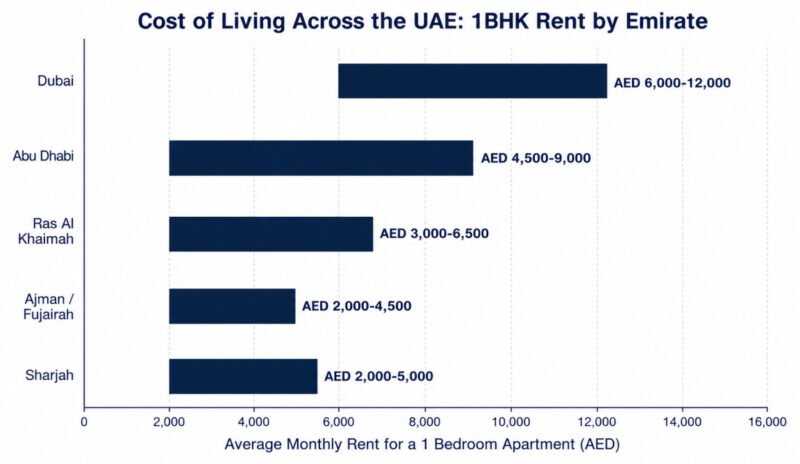
Horizontal bar chart comparing average one bedroom apartment rent ranges across Sharjah, Ajman, Fujairah, Ras Al Khaimah, Abu Dhabi and Dubai
As the chart shows, Dubai sits at the top of the rent scale, while Sharjah, Ajman, and Fujairah offer the most affordable entry points. Abu Dhabi and Ras Al Khaimah land in between, giving a middle ground for expats who want more space without the highest price tag.
Dubai: Best for Career Growth and City Life
Dubai remains the first stop for most expats, and for good reason. The job market is the deepest in the region, public transport covers most major business districts, and the range of neighborhoods means there is genuinely something for every budget and life stage.
Areas worth shortlisting:
- Dubai Marina and JBR: Waterfront living popular with young professionals and singles who want walkable nightlife and beach access
- Jumeirah Village Circle (JVC): One of the most budget friendly options inside Dubai proper, popular with first time renters and small families
- Arabian Ranches and Mirdif: Villa communities built for families who want space, parks, and quieter streets
- Downtown Dubai and Business Bay: Premium addresses close to major offices, ideal for professionals who prioritize a short commute over lower rent
Average one bedroom rent in Dubai ranges from AED 6,000 to AED 12,000 per month, with premium districts going higher.
Abu Dhabi: Best for Families and Long Term Stability
As the capital, Abu Dhabi tends to attract expats planning a longer stay, particularly families. Apartments and villas are generally more spacious for a comparable budget, and the city has invested heavily in schools, healthcare, and cultural infrastructure.
Areas worth shortlisting:
- Al Reem Island: High rise living close to the city center with strong infrastructure
- Saadiyat Island: A quieter, culture focused community near the museums and beaches
- Khalifa City: Popular with families who want villa living at a lower price point than similar Dubai communities
Average one bedroom rent in Abu Dhabi ranges from AED 4,500 to AED 9,000 per month.
Sharjah: Best for Budget Conscious Expats
Sharjah consistently offers the lowest cost of living among the larger emirates while remaining close enough to Dubai for a daily commute. It suits expats who want to save aggressively or who are supporting family back home.
Areas worth shortlisting:
- Al Khan: Coastal apartments with a relatively modern feel
- Al Majaz: Lakeside living near parks and cafes
- Muwaileh: A practical option for anyone studying or working near the university area
Average one bedroom rent in Sharjah ranges from AED 2,000 to AED 5,000 per month, though the commute into Dubai during peak hours is worth factoring in before committing.
Ras Al Khaimah: Best for Nature and Remote Work
RAK has grown quickly as an option for expats who want a slower pace without giving up modern amenities. The emirate combines mountains, beaches, and increasingly serious infrastructure investment, making it a strong fit for remote workers and retirees.
Areas worth shortlisting:
- Al Hamra Village: A gated community with golf and direct beach access
- Mina Al Arab: Waterfront apartments and villas with a resort feel
Average one bedroom rent in RAK ranges from AED 3,000 to AED 6,500 per month.
Ajman and Fujairah: Best for Maximum Affordability
For expats prioritizing cost above all else, Ajman and Fujairah remain the most affordable options in the country. Both emirates offer a quieter, more traditional pace of life and are popular with families supporting dependents outside the UAE.
Areas worth shortlisting:
- Ajman Corniche: Waterfront apartments at some of the lowest rents in the country
- Fujairah City: A practical base for anyone working in the shipping, logistics, or oil sectors on the east coast
Average one bedroom rent in Ajman and Fujairah ranges from AED 2,000 to AED 4,500 per month.
Read Also: UAE Real Estate Market 2026: Best Investment Guide
How to Choose the Right Emirate for You
There is no single best answer, only the best fit for your situation. A few practical filters help narrow things down quickly.
If your job is based in Dubai, weigh the commute honestly before choosing Sharjah or Ajman purely for lower rent. A one hour commute each way adds up over a year in ways that are easy to underestimate at signing time.
If you are relocating with school age children, prioritize proximity to an accredited curriculum that matches your home country, since switching schools mid year is disruptive and switching between British, American, and IB systems can affect credit transfer.
If you plan to eventually buy property rather than rent long term, focus your search on freehold areas from the start, since this affects which communities are even available to you as an investor down the line.
Final Thoughts
Dubai remains the strongest all round choice for career focused expats who want variety and are comfortable paying for convenience. Abu Dhabi suits families who want space and long term stability. Sharjah, Ajman, and Fujairah reward anyone prioritizing savings over proximity, and Ras Al Khaimah offers a genuine alternative for remote workers and retirees who want nature without isolation. Matching your budget, commute tolerance, and family needs against these five profiles is usually enough to land on the right emirate before you even start viewing apartments.
Frequently Asked Questions
Which emirate is cheapest to live in for expats?
Ajman and Fujairah consistently offer the lowest average rents in the UAE, followed closely by Sharjah.
Is it better to live in Dubai or Abu Dhabi as an expat?
Dubai suits expats prioritizing career opportunities and lifestyle variety, while Abu Dhabi suits families wanting more space and a steadier pace at a comparable or lower rent.
Can expats buy property in these areas?
Yes, in designated freehold zones. Dubai has the widest range of freehold communities open to foreign buyers, with Abu Dhabi and Ras Al Khaimah also expanding freehold options.
How much rent should an expat budget for in Dubai?
A single professional typically budgets AED 6,000 to 12,000 per month for a one bedroom apartment, depending on the neighborhood.
Is Sharjah a good option if I work in Dubai?
It can be, provided you factor in the daily commute time and cost. Many expats successfully commute from Sharjah, but peak hour traffic on Sheikh Mohammed Bin Zayed Road should be tested before signing a long lease.
What is the best emirate for families with school age children?
Abu Dhabi and Dubai both offer strong access to international curriculums, though Abu Dhabi is often favored for its larger villa communities and calmer pace.