
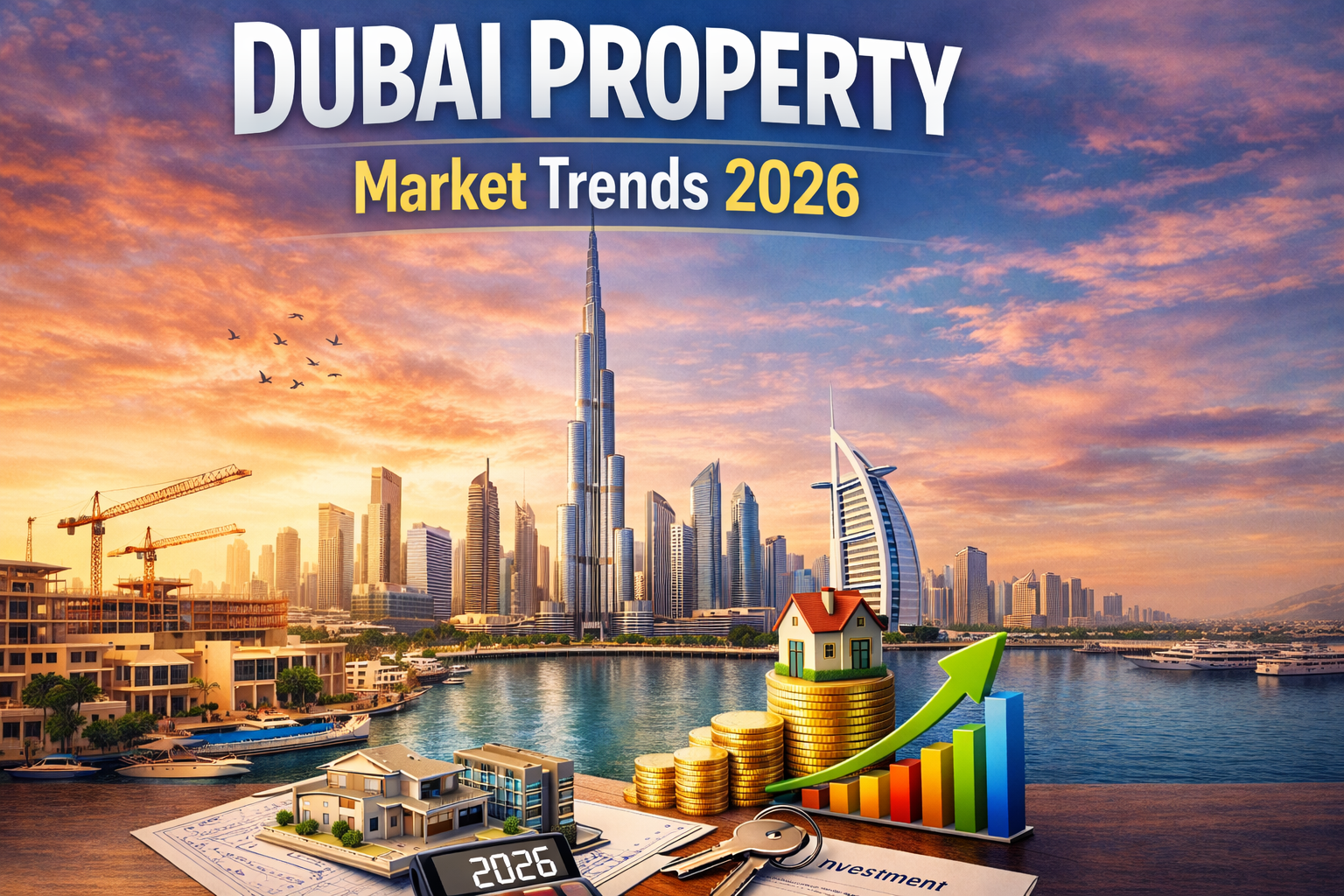
Dubai’s real estate market is one of the most dynamic and exciting in the world. Every year, it attracts investors, expatriates, and homebuyers looking for opportunities. In 2026, the Dubai property market is showing both challenges and potential for growth, making it essential for investors and homebuyers to stay informed. Understanding the Dubai real estate trends, the best areas to invest, and emerging opportunities can help you make smarter decisions and maximize your returns.
In this article, we explore the latest Dubai property trends, provide actionable insights, and highlight examples and case studies to guide you through the evolving landscape.
Introduction: Why 2026 Is Crucial for Dubai Real Estate
Dubai’s property market has always been attractive due to its global appeal, strategic location, and innovative urban planning. After the success of Expo 2020 and the continued population growth, Dubai has positioned itself as a world-class real estate hub.
Experts suggest that 2026 may bring a balance between new property supply and sustained demand. Developers are increasingly focusing on projects for end-users rather than speculative buyers, making the market more stable. According to a report by Knight Frank, Dubai continues to rank among the top 10 cities globally for property investment, especially in the residential and luxury segments.
Anecdotally, many investors who bought properties in Dubai Marina or Downtown Dubai in the last three years have reported double-digit returns, showing the resilience of the market even during global uncertainties.
1. Off-Plan Properties Continue to Attract Investors
One of the most popular trends in Dubai real estate is the ongoing interest in off-plan properties. Buyers are drawn to these projects due to flexible payment plans, early-bird discounts, and potential capital appreciation.
Example: Investors in Dubai Marina who purchased off-plan units in 2023 saw property values rise by 15–20% in just two years, highlighting the potential of carefully selected projects.
| Developer | Project | Average ROI (2025-2026) |
| Emaar | Downtown Dubai | 12–15% |
| Damac | Akoya | 10–13% |
| Meraas | City Walk Residences | 9–11% |
Off-plan investments remain a low-risk entry point for new investors, provided they choose reputable developers. Dubai property investment guides frequently recommend monitoring project timelines and developer track records to avoid delays or subpar construction quality.
2. Shift Toward End-User and Family-Oriented Developments
Dubai’s market is increasingly focusing on family-friendly communities. Areas like Jumeirah Village Circle (JVC), Arabian Ranches, and Dubai Hills Estate are popular for villas and apartments with parks, schools, and health facilities.
A real-life example involves a young expatriate family in Dubai Hills Estate. By prioritizing a property near schools and parks, they enhanced their lifestyle and achieved a higher resale value within three years. This anecdote highlights the growing preference for properties designed for long-term living rather than speculative investment.
Developers are responding by building integrated communities with lifestyle amenities—a trend that’s shaping Dubai property market trends 2026.
3. Sustainable and Smart Homes Gain Popularity
Sustainability is no longer optional; it’s a growing factor in Dubai real estate investment. Energy-efficient appliances, solar panels, and smart home systems are increasingly in demand.
The Dubai government has introduced incentives for green buildings, making sustainable properties attractive for both investors and buyers.
Case Study: An off-plan villa in Arabian Ranches II with smart home features attracted tenants willing to pay 8% higher rent compared to traditional villas. This demonstrates that integrating eco-friendly and tech-enabled solutions can enhance rental yields and long-term value.
For investors aiming at future-proof properties, sustainability and smart homes are essential considerations in 2026.
4. Rental Yields and Short-Term Income Properties
Dubai has long been known for attractive rental yields, especially in areas with high tourist traffic. Neighborhoods like Dubai Marina, JBR, and Downtown Dubai continue to offer solid returns.
The rise of short-term rental platforms like Airbnb has further boosted interest in investment properties capable of generating passive income. Recent statistics indicate:
- Apartments: 6–8% rental yield
- Villas: 4–6% rental yield
For instance, a property in Jumeirah Beach Residence achieved a 7% average yield for short-term rentals over the past year. Investors considering buy-to-let strategies should prioritize high-demand areas to optimize occupancy and returns.
5. Luxury and Prime Segments Remain Resilient
Despite fluctuations in other sectors, Dubai’s luxury real estate continues to thrive. Locations like Palm Jumeirah, Downtown Dubai, and Business Bay attract high-net-worth individuals worldwide.
Luxury buyers are motivated by long-term value, exclusivity, and lifestyle appeal. One client who purchased a penthouse in Downtown Dubai cited architectural design, prime location, and investment potential as the key reasons.
Dubai’s luxury market trends in 2026 suggest that prime properties remain a safe bet for investors looking for prestige and stability.
6. Population and Infrastructure Growth Drive Housing Demand
Dubai’s population growth and infrastructure development are key drivers of property demand. New metro lines, highways, and proximity to business hubs improve connectivity, making residential areas more desirable.
Areas like Dubai South and Dubai Silicon Oasis have seen a 10–12% increase in property inquiries year-on-year. Infrastructure projects, such as the expansion of Dubai Metro and road networks, directly influence property appreciation and should be closely monitored by investors.
7. Technology and PropTech Transforming the Market
PropTech innovations are revolutionizing the Dubai property sector. Tools such as virtual tours, blockchain land registries, and real-time market analytics offer transparency, convenience, and faster decision-making.
Example: A buyer was able to purchase an off-plan apartment in Dubai without visiting the site, thanks to virtual property tours. This shows how technology is making investment decisions more efficient while reducing risk.
Adopting PropTech can speed up sales cycles and increase investor confidence, a trend expected to accelerate in 2026.
8. Pricing Dynamics and Supply Pressures
As the market matures, pricing dynamics are becoming more nuanced. Analysts expect moderate price corrections in certain areas, balancing high-demand locations with new supply.
- Off-plan sector: Faces competition from ready-to-move units
- Luxury apartments: Maintain stability despite new developments
A comparison between Dubai Marina and Dubai Hills Estate illustrates that mid-range off-plan apartments are more sensitive to supply, while luxury apartments enjoy steady prices. Understanding these dynamics is essential for investors and buyers aiming to time their purchases strategically.
Conclusion: Navigating Dubai’s Property Market in 2026
Dubai’s property market in 2026 presents a year of cautious optimism. Key trends include:
- Off-plan investments offering early entry and high ROI
- Family-oriented and sustainable properties gaining traction
- Luxury segment resilience providing stability for high-net-worth investors
- Infrastructure and PropTech innovations driving long-term growth
By focusing on high-demand areas, monitoring rental yields, and leveraging technology, both investors and homebuyers can make informed decisions and navigate Dubai’s dynamic real estate landscape successfully.
FAQs
What areas in Dubai are best for property investment in 2026?
Popular areas include Dubai Marina, Downtown Dubai, Dubai Hills Estate, and Arabian Ranches. Each offers rental potential, amenities, and high resale value.
Are off-plan properties a safe investment in Dubai?
Yes, when purchased from reputable developers. Off-plan properties offer flexible payment plans and potential appreciation.
How is the rental market expected to perform in 2026?
Rental yields are expected to remain strong, particularly in high-demand areas. Short-term rentals can boost returns but require management.
Is the luxury property segment stable in Dubai?
Yes, luxury properties in Palm Jumeirah and Downtown Dubai remain resilient due to sustained demand.
What role does sustainability play in property investment?
Sustainable and smart homes are increasingly important, offering cost savings, higher rental appeal, and compliance with government regulations.
How does infrastructure growth affect property prices?
New roads, metro lines, and business hubs improve accessibility, increasing demand and property values.
Should expatriates consider buying property in Dubai?
Yes, Dubai’s market is transparent, offering investment and residency opportunities, especially in family-friendly communities.
How can technology aid property buying in Dubai?
PropTech tools like virtual tours, online listings, and blockchain registries enhance transparency, reduce risk, and speed up decisions.
About the Author

2 thoughts on “Dubai Property Market Trends 2026: What Investors and Homebuyers Need to Know”